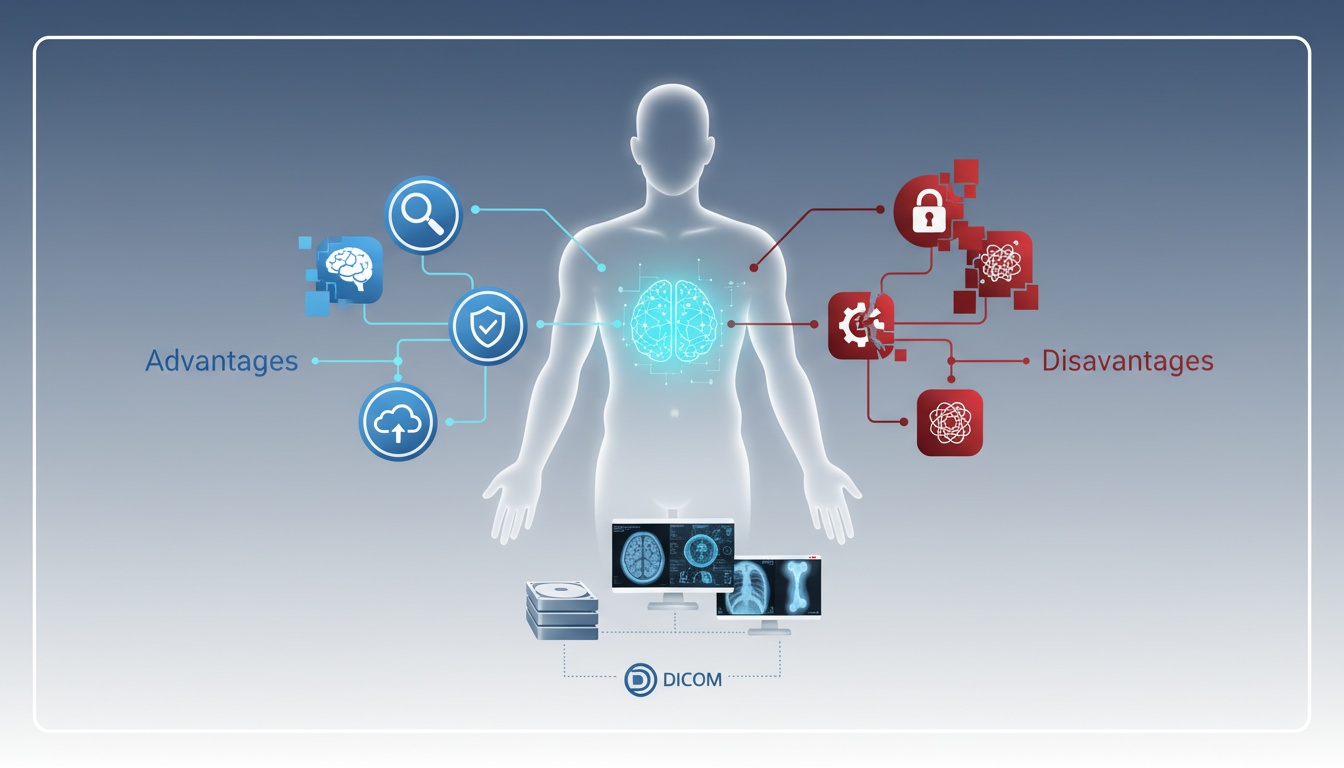
Healthcare organizations keep changing the way they run clinical processes, enhance patient experiences, and eliminate administrative waste. The Electronic Health Record (EHR) is one of the most significant technologies that are contributing to that transformation.
EHR systems assist providers in digitally storing, managing, and sharing patient information. They have the ability to enhance care coordination, decrease paper work and facilitate superior clinical judgments. Meanwhile, they can bring with them implementation costs, training challenges, cybersecurity issues, and disruptive workflows unless deployed in a strategic manner.
Knowledge of advantages and disadvantages of EHR systems is critical to hospitals, imaging centers, clinics, and private practices considering investments in healthcare technology.
EHR systems enhance access, accuracy of documentation, teamwork, efficiency in billing, and coordination of long-term care. Nevertheless, they can also bring about costs, adoption problems by the users, risks of downtime, integration difficulties, and security burden. In contrast to EMRs, EHRs are developed to exchange data across organizations and those that enable connected care ecosystems.
An Electronic Health Record is an electronic copy of a medical history of a patient that can be accessed and updated by a certified medical professional in a variety of care settings.
Common EHR data might consist of:
• Demographics
• Diagnoses
• Medications
• Allergies
• Physician Notes
• Laboratory Results
• Imaging Reports
• Treatment History
• Referrals
• Billing/ Insurance Information.
Contemporary EHR systems are designed in such a way that they facilitate continuity of care as opposed to isolated record keeping.
Though the two terms are used interchangeably, the two are not the same.
| Feature | EHR | EMR |
| Primary Use | Broad patient record management | Internal clinic record management |
| Data Sharing | Multi-provider capable | Usually limited to one practice |
| Longitudinal Care View | Strong | Limited |
| Interoperability Potential | High | Lower |
| Referrals & Coordination | Stronger | Basic |
EMR can be centered on a single provider or a single clinic. An EHR is supposed to accompany the patient through the healthcare system.
 - Created by PostDICOM.jpg)
The records can be accessed immediately as opposed to searching paper charts or faxed paperwork. This aids in minimizing the wait time in making treatment decisions.
With the same patient record being accessed by specialists, primary care physicians, radiologists, and other clinicians, communication is enhanced and redundant work is avoided.
Formatted, written and standardized records are more likely to be read than handwritten notes. This can help minimize documentation errors.
A number of EHR systems have allergy, drug-drug interaction, abnormal lab test, or preventive care alerts.
A combination of coding and charge capture processes can help minimize the errors in claims and enhance the speed of reimbursement.
Digital records remove the need to store large amounts of paper charts, and can assist in reducing administrative expenses.
Healthcare organizations are able to analyze the metrics of operations, patient trends, quality indicators, and utilization data more efficiently.
Numerous systems provide patient portals where users can access the results, make appointments, fill out the forms, or securely communicate.
Organizations that have more than one clinic or distributed teams can ensure continuity across the location.
The management of chronic diseases is enhanced when the history of visits, medication change, previous imaging, and treatment plans are available over time.
It can be very costly in terms of investment in terms of licensing, setup, migration, consulting, hardware, integrations and training.
Long-term costs can be incremented by cloud subscriptions, support contracts, updates, cybersecurity controls, and user expansion.
New systems need to be structured onboarded. In the absence of change management, there is the risk of reduced productivity in the short run.
Transitioning away to paper or legacy software can impact on the registration, documentation, scheduling, or billing in the rollout.
This can result in patient records not being accessed during internet outages, server failure or through software issues unless continuity plans are strong.
Health information is very sensitive. There is actual risk in ransomware, phishing, stealing credentials, and weak access controls.
Other clinicians believe that EHR systems add screen time and documentation load to workflows in the event that workflows are not designed adequately.
Substituting suppliers in the future may be costly and operationally challenging when there are restrictions on export standards or integrations.
All EHRs are not compatible with labs, PACS, billing tools, or third-party platforms.
Over-templating can cause repetitive notes, which are less clinically meaningful unless they are followed up.
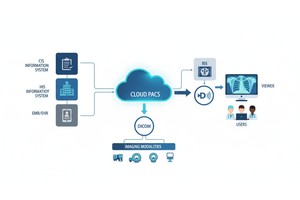
An EHR is much more useful when it is able to share data with other healthcare technologies.
Examples include:
• Lab Information Systems
• Radiology Information Systems
• Pacs PlatformsPACS platforms
• E-prescribing Tools
• Billing Systems
• Referral Systems
• Patient Engagement Apps
Without interoperability, organizations are at risk of data silos, duplicated tests, slowed decision-making, and fragmented care.
Some of the standards commonly used are:
• Hl7
• Fhir Apis
• Dicom For Imaging DICOM for imaging
• Secure Clinical Messaging Frameworks
Workflows in imaging are an essential component of integrated healthcare processes.
An example of a typical workflow can be seen as follows:
1. An Imaging Order Is Placed By A Physician In The Ehr.
2. The Request Is Sent To The Radiology Workflow System.
3. The Stored Images Are Reviewed Inpacs Or Cloud Imaging Systems.PACS or cloud imaging systems
4. Radiologists Finalize Reports.
5. Image Access Links And Results Lead To The Ehr.
In case imaging systems work well on EHR settings, clinicians can have quicker access to diagnostic data and enhanced continuity of care.
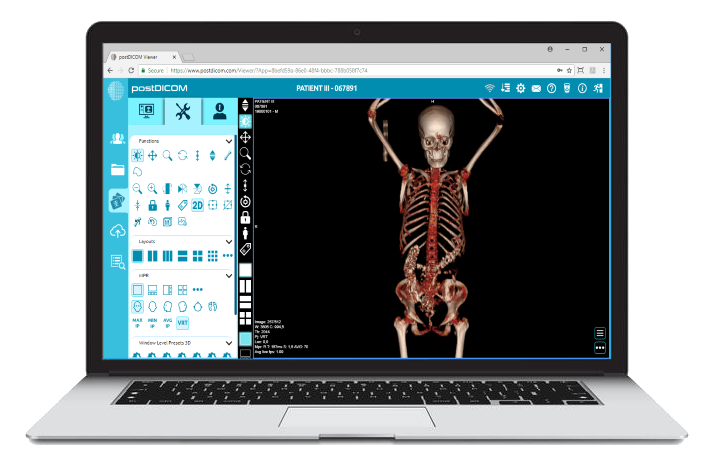
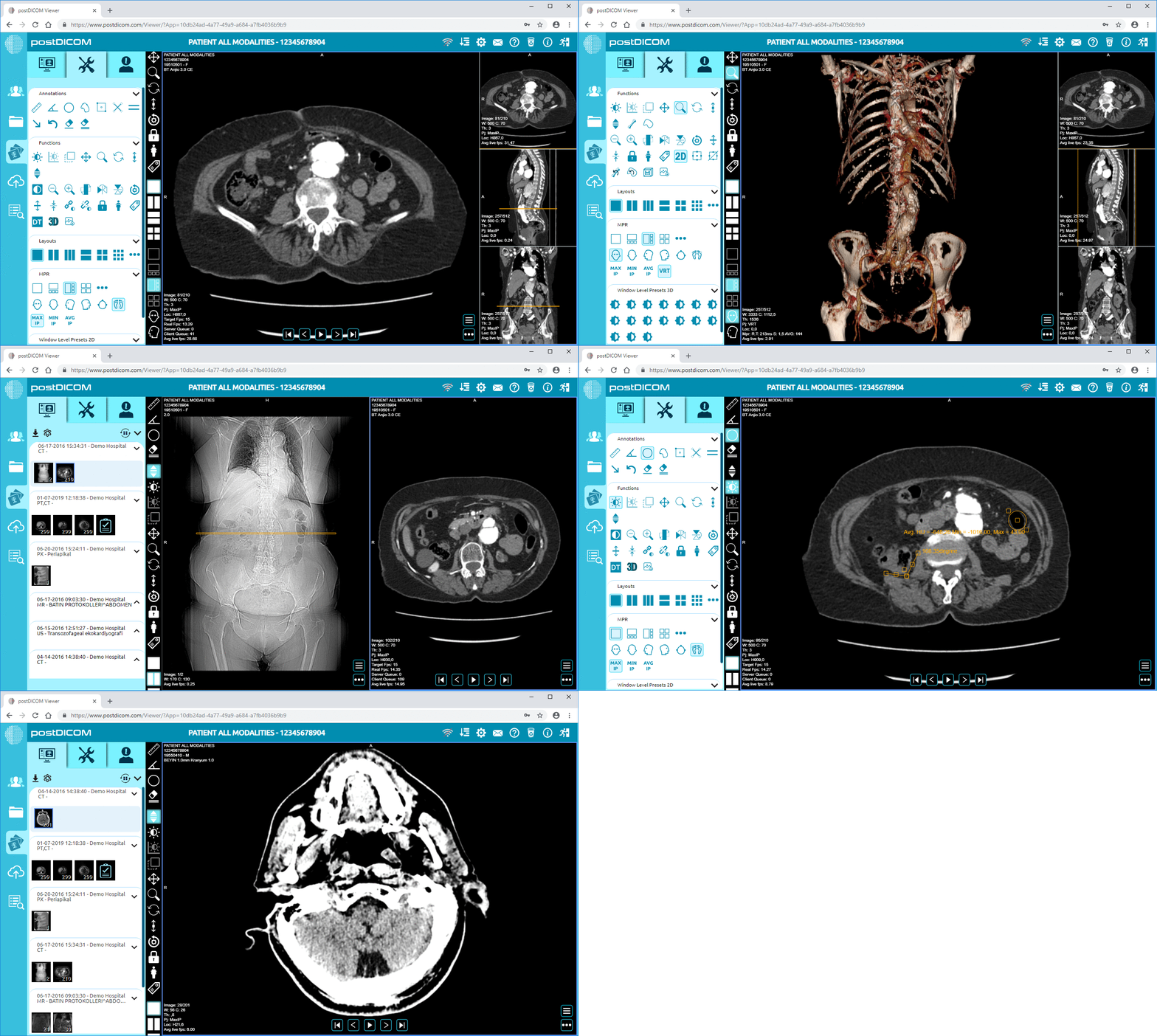
Some of the platforms that can be used to support secure cloud imaging access, collaboration and modern web-based workflows that complement enterprise healthcare ecosystems, include PostDICOM.
Require multi-department coordination, compliance and enterprise reporting.
Need exchanged records between locations.
Referrals, scheduling, documentation and results management.
Require links scheduling, reporting, and physician access.
Require scalable systems that lessen manual administration.
Before purchasing, evaluate:
• Interoperability Capabilities
• Imaging Integration Options
• User Experience For Clinicians
• Onboarding And Training Support
• Reporting Tools
• Mobile Access
• Security Controls
• Total Cost Of Ownership
• Implementation Timeline
• Vendor Reputation
A decision based on price alone is likely to cause operational pain in the long term.
Most healthcare institutions concentrate on initial prices when comparing the EHR systems. Although budget is a concern, long term value is frequently determined by usability, flexibility of integration, vendor support and scalability. A cheaper system can prove to be more expensive in the future, should it give rise to workflow inefficiencies or prove to be expensive to do custom integrations.
Other typical errors are not properly estimating the training needs of the staff, not engaging the clinicians in the selection process, not planning the data movement, and also not evaluating cybersecurity controls. An optimal EHR decision will have a balanced cost, adoption, operational efficiency, and future growth
Various healthcare institutions require varying EHR functions. Affordability, minimal workflow, scheduling, billing efficiency, and rapid onboarding of staff are often prioritized in small clinics. Usability may be a higher priority than a sophisticated enterprise functionality.
The large hospitals and health networks tend to need more functionality, such as multi-department coordination, specialty workflows, analytics dashboards, and advanced permissions, compliance reporting, and high interoperability with imaging, laboratory, and pharmacy systems. Finding the correct fit can usually be more crucial than finding the largest brand.
In organizations where collaboration is needed among the providers, the EHR systems tend to be more capable since they are designed to share data across the providers.
The largest short-term challenge to many organizations is implementation cost and disruption of workflow during the implementation.
Yes. Numerous healthcare facilities connect EHR systems to PACS, RIS, and cloud imaging tools with current interoperability standards.
They may be very secure when the organizations apply encryption, access control, audit and backup, and staff cybersecurity training.
Hospitals, family practices, specialty clinics, urgent care centers, imaging centers, and multi-location healthcare organizations are examples of organizations widely using EHR systems.
EHR systems provide significant operational and clinical benefits, such as easier access to records, enhanced coordination, enhanced documentation, and scalable digital workflows. Nonetheless, its success is pegged on its careful implementation, adoption by users, security planning, and interoperability preparedness.
When healthcare organizations consider EHR investments, they must look beyond feature lists and focus on related ecosystems where clinical data, imaging, reporting, and patient communication interact synergistically.
Organizations that strategically assess EHR systems are often more efficient in their operations, have stronger patient experiences, and have better data visibility in the long term. In the current healthcare, the optimal EHR is not merely digital, but integrated.
|
Cloud PACS and Online DICOM ViewerUpload DICOM images and clinical documents to PostDICOM servers. Store, view, collaborate, and share your medical imaging files. |