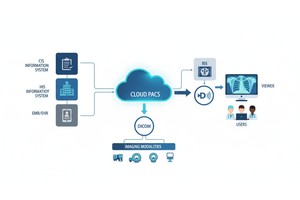
Healthcare delivery has undergone a structural transformation in the last decade. Imaging volumes have increased exorbitantly due to the improvement in multi-slice CT, high-resolution MRI, 3D mammography, digital pathology and AI assisted diagnostics. At the same time models of care have shifted towards distributed networks, tele-radiology, cross-institutional co-operation and remote access to specialists.
Traditional on-premises infrastructure was not built for this scale, mobility and computing need. As a result, a lot of healthcare institution re-think the ways in which imaging data is stored, accessed, shared and analyzed.
Traditional on-premises infrastructure was not designed for this scale, mobility, and computing requirement. As a result, a lot of healthcare institutions are rethinking the ways in which imaging data is stored, accessed, shared, and analyzed.
As with the case of DICOM-based imaging environments, healthcare cloud infrastructure has become an essential enabler in the patient care world. When implemented strategically, it helps improve the speed of diagnosis, enhance collaboration, make the system more resilient, and help in AI-powered workflows.
This article describes the role the healthcare cloud plays, in this case, in medical imaging ecosystems and contributing directly to measurable improvement in patient care.
Healthcare cloud adoption in imaging environments provides clinical and operational impact through a number of core mechanisms:
• It Provides Access To Medical Images In Real Time In A Secure Manner From Anywhere.
• It Increases The Diagnostic Turnaround Time With The Distributed Reporting Workflow.
• It Offers Elastic Storage Capacity For Expanding Imaging Data Sets.
• It Makes The System More Resilient By Having Redundancy And Disaster Recovery.
• It Supports Integration Of Ai And Advanced Imaging Analytics At Scale.
These benefits extend beyond the scope of IT modernization-they impact how quickly and accurately clinicians can provide care.
In broad terms, the healthcare cloud is a cloud-based infrastructure designed to securely manage, store, and process healthcare data. However, in the world of medical imaging environments, this concept becomes more specific and operationally complex.
Healthcare cloud within imaging ecosystems normally includes:
• Pacs (picture Archiving And Communication Systems) Hosted By The Cloud
• Vendor Neutral Archives (vna)
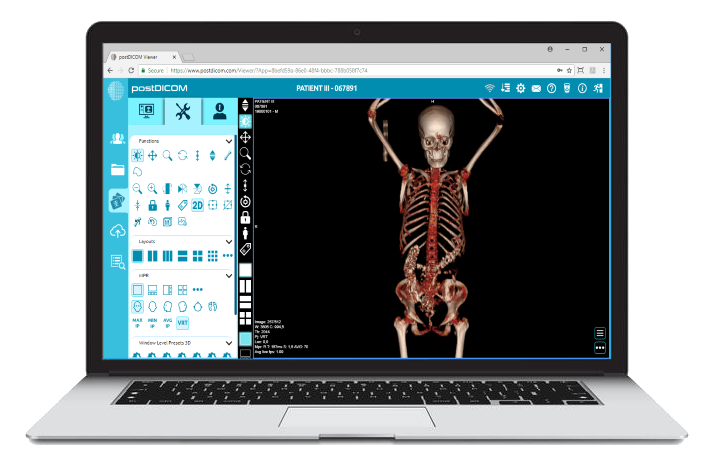
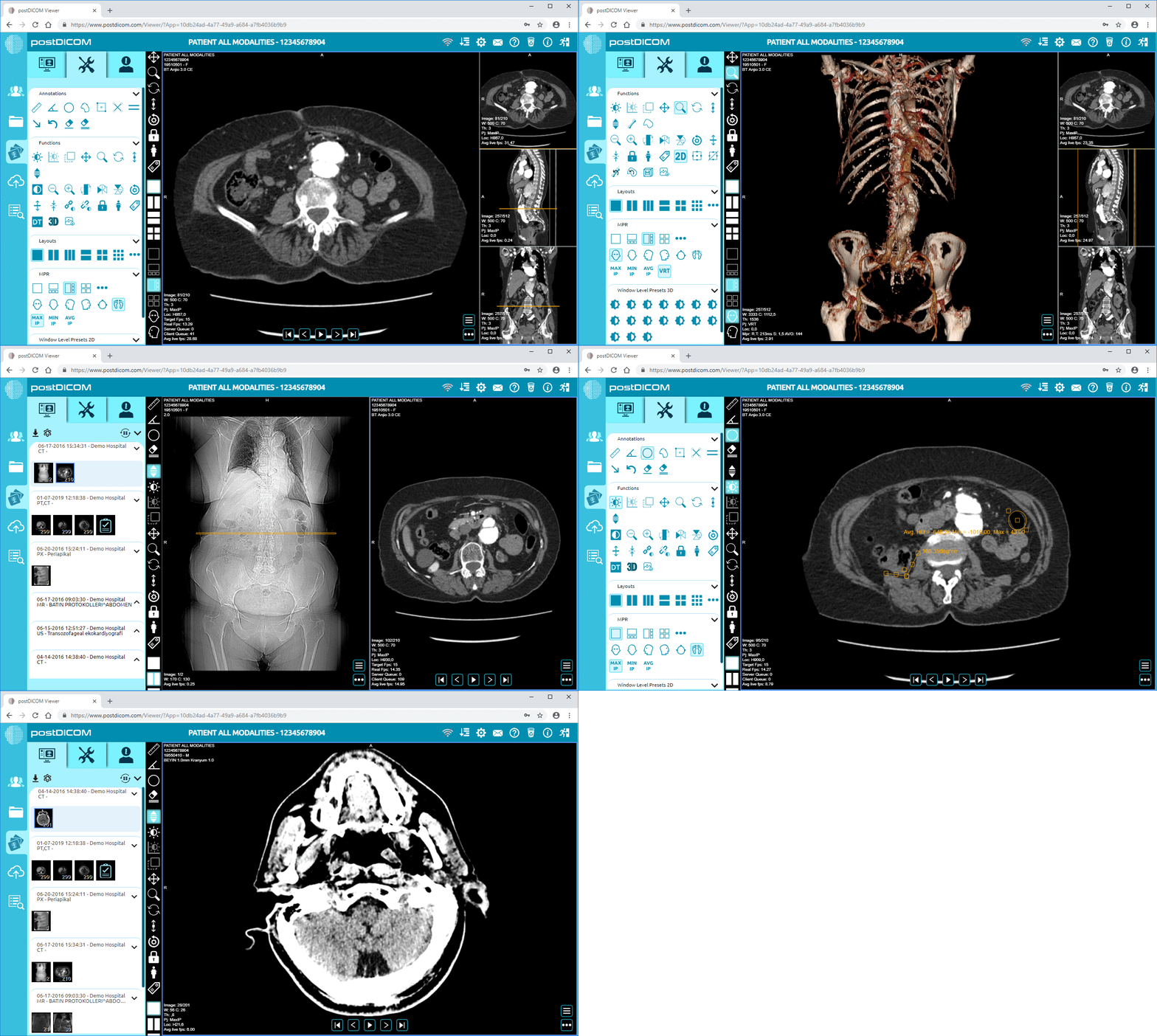
• Web-based Dicom Viewers
• Secure Image Exchange Platforms
• Integration With Ris, His, And Ehr Systems
• Image Processing Environments Powered By Ai
These systems may work on various architectural models. Infrastructure-as-a-Service (IaaS) is for the virtualization of storage and computing power. Software-as-a-Service (SaaS) is used to provide fully managed, cloud-based PACS platforms with secure web interfaces. Hybrid architectures are a blend of local hardware and the scalability of the cloud to balance latency and compliance with performance needs.
Unlike the traditional PACS environments based on physical servers and internal IT maintenance, the cloud-based imaging systems have elastic scalability, centralized updates, and browser-based accessibility.
Evaluating healthcare cloud purely from the IT perspective understates its impact. The measure is found in its impact on clinical workflows and patient outcomes.
In emergency medicine, neurology, trauma care and oncology, there are many examples of where the speed of diagnosis will have a direct impact on the treatment decisions and outcomes. Cloud-based imaging systems facilitate the connection of radiologists and specialists to DICOM studies from different locations in a secure manner without having to rely on complex VPN configurations or the limitations of their workstations.
This remote accessibility makes it possible to:
• Immediate Case Review At Home Or Secondary Offices
• Emergency Consultations, Which Are Held Very Quickly
• Collaboration Between Cross-institute Specialists
• Reduced Reporting Backlogs
By eliminating geographic constraints and infrastructure bottlenecks, the diagnostic turnaround time is reduced with cloud-based imaging environments. Earlier diagnosis implies earlier intervention, which in many clinical scenarios can make a significant difference in the prognosis of the patient.
The nature of modern healthcare is so collaborative. Complex cases often require coordinated input from radiologists, oncologists, surgeons, cardiologists, and referring physicians.
Cloud-based platforms help to facilitate this collaboration by allowing secure, real-time sharing of images between departments and institutions. Instead of having to use physical media transfers or slow file uploads, clinicians can view synchronized imaging datasets using web-based viewers during tumor boards or multidisciplinary meetings.
Such a collaborative capability supports:
• Integrated Treatment Planning
• Faster Second Opinions
• Reduced Communication Gaps
• Improved Continuity Of Care
When imaging becomes immediately accessible to all stakeholders, clinical decision-making is more cohesive and well-informed.
Medical imaging data is still exploding in volume as well as file size. High-resolution imaging modalities and sophisticated 3D reconstructions produce larger and larger data sets. On-premise infrastructure has to invest a lot of capital and also has to be updated with a hardware refreshing process from time to time to accommodate this growth.
Cloud-based systems have elastic storage models that scale dynamically based on demand. Rather than spending money on physical servers that can become obsolete in a matter of years, healthcare institutions can easily scale up storage capacity.
This scalability supports:
• Long-term Archival Compliance
• Compare Of Longitudinal Patient Image
• Ai Dataset Development
• Multi-site Imaging Consolidation
And by eliminating storage restrictions, healthcare providers can maintain complete diagnostic histories, enabling better longitudinal patient management.
Security concerns previously held back the adoption of the healthcare cloud. However, modern cloud environments are built with a multi-layered defence mechanism that, in many cases, is superior to local infrastructure.
A mature healthcare cloud architecture usually includes:
• Encryption Of Data In Motion And Data At Rest
• Role-based Access Controls
• Multi-factor Authentication
• Comprehensive Audit Logging
• Geographically Distributed Redundancy
Beyond the privacy of data, these safeguards ensure the continuity of operations. Imaging downtime can cause delays in diagnoses and patient care. Cloud redundancy reduces the risks of catastrophic system failure and supports continuous clinical workflows.
Healthcare institutions are increasingly at risk from cyberattacks, natural disasters, and infrastructure failure. Traditional on-premise PACS environments are often based on manual backup processes and localised recovery systems.
Cloud infrastructure, on the other hand, has data spread across different regions and built-in failover mechanisms. In case of hardware failure or local disruption, imaging services can be kept running with minimum downtime.
Maintaining diagnostic continuity during times of crisis has a direct impact on patient safety and standards of care consistent with the professional imperatives of delivering patient care.
Artificial intelligence has become a transformative force in radiology. AI algorithms assist with triage, anomaly detection, quantification, and workflow prioritization. However, these systems require scalable computing resources and centralized data pipelines.
Cloud infrastructure provides the computational elasticity necessary to deploy AI models efficiently. It supports:
• Large-scale Image Processing
• Ai-assisted Reporting
• Automated Case Prioritization
• Quantitative Imaging Analytics
Without cloud-based scalability, AI implementation becomes cost-prohibitive or technically constrained. By enabling AI workflows, healthcare cloud environments indirectly enhance diagnostic accuracy and operational efficiency.
Understanding the operational differences between cloud-based and traditional systems explains why so many institutions are transitioning.
| Feature | Traditional On-Prem PACS | Cloud-Based PACS |
| Upfront Investment | High capital expenditure | Subscription-based |
| Scalability | Hardware-dependent | Elastic, on-demand |
| Remote Access | VPN required | Secure web access |
| Maintenance | Internal IT responsibility | Managed service model |
| Disaster Recovery | Manual backup processes | Built-in redundancy |
| Collaboration | Limited external sharing | Real-time distributed access |
| AI Compatibility | Infrastructure constrained | Cloud compute scalable |
This structural contrast shows how cloud-based systems integrate better with today's clinical demands.
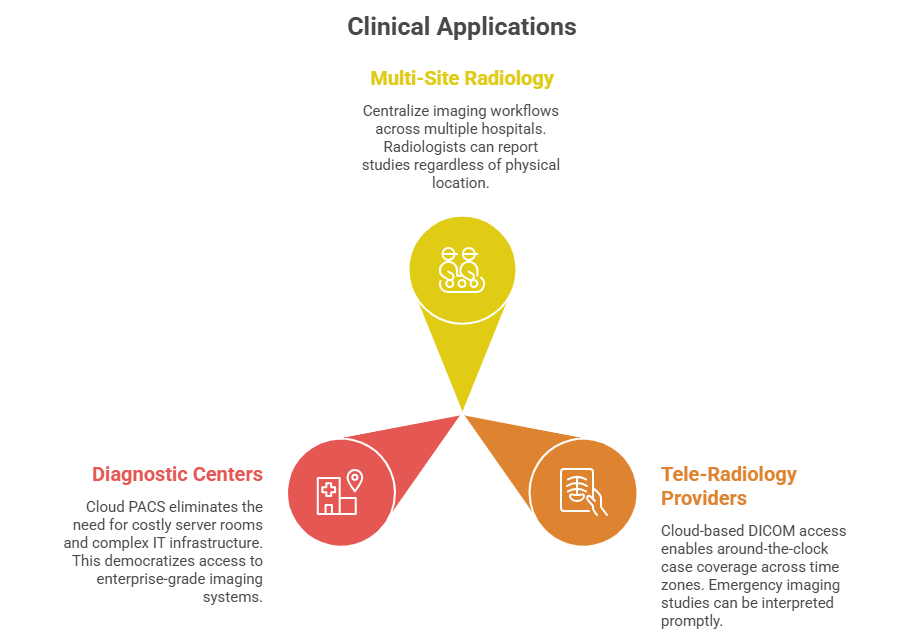
Radiology groups that are spread across many hospitals can centralize imaging workflows. Radiologists can report studies regardless of where they are, better distributing the workload and maintaining consistency.
Cloud-based DICOM access allows for 24/7 access to cases in different time zones. Emergency imaging studies can be interpreted in a timely fashion, which can decrease treatment delays.
For smaller institutions, cloud PACS is used to eliminate expensive server rooms and complex IT infrastructure. This democratizes access to enterprise-grade imaging systems.
Adopting a healthcare cloud needs structured planning. Institutions should consider:
• Data Migration Strategy
• Network Bandwidth Preparation
• Compliance And Regulatory Compliance
• Integration With Existing Ris/his/ehr Systems
• Vendor Interoperability
• Service-level Agreements
Cloud transition is not just a technical transition - it's an operational transition - it has an impact on workflows, governance, and long-term scalability.
Healthcare cloud architecture is still evolving. Emerging developments include:
• Hybrid Edge And Cloud Deployments
• Zero-footprint Web Viewers
• Imaging Exchange Networks Across Institutions
• Federated Artificial Intelligence Learning Models
• Advanced Interoperability Frameworks
Institutions that invest in scalable cloud infrastructure today are putting themselves in a position to adopt future innovations seamlessly.
Healthcare cloud for medical imaging is a safe, secure cloud infrastructure for storing, accessing, managing, and sharing the DICOM images and associated clinical data. It provides for scalability in storage, web-based viewing and distributed collaboration without requiring local dependencies on hardware systems.
Modern cloud PACS systems provide encryption, access controls, audit trails, and geographic redundancy to keep sensitive healthcare information safe. Security is dependant on proper configuration and compliance to it.
Cloud systems provide remote reporting capabilities, more efficient case distribution, scale storage and artificial intelligence (AI) integration. These features decrease bottlenecks and accelerate the turnaround of diagnostics.
Yes. Cloud PACS lowers the initial cost of the capital investment in addition to the IT maintenance, which helps bring more advanced imaging infrastructure to smaller healthcare providers.
While subscription fees come along with cloud comes the requirement to remove massive hardware costs, maintenance complications and monetary damage as a result of downtimes.
Healthcare cloud adoption in medical imaging is more than infrastructure modernization. It allows for faster diagnosis, better collaboration, scalable data management, integration with artificial intelligence, and operational resilience.
When strategically aligned with DICOM-based workflows and web-based viewing environments, the healthcare cloud directly supports the delivery of more responsive, coordinated, and effective patient care.
|
Cloud PACS and Online DICOM ViewerUpload DICOM images and clinical documents to PostDICOM servers. Store, view, collaborate, and share your medical imaging files. |